Architecture Overview
High-level map of Harbor on Ethereum. User walkthrough: How It Works. Integrators: Build on Harbor.
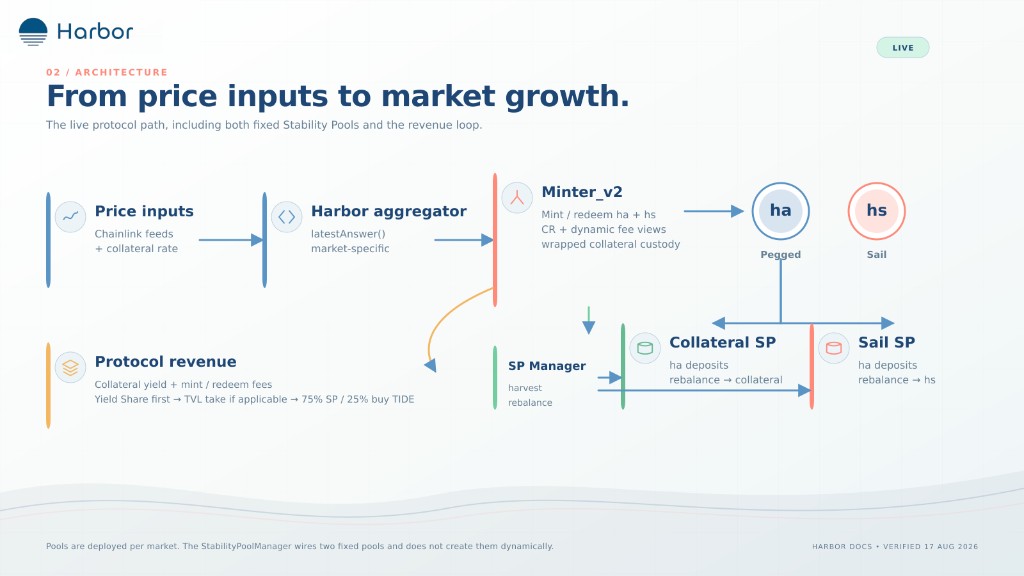
System components
1. Price oracles
- Harbor Price Aggregators compose Chainlink feeds per market
- Oracle shown on each market page in the app
- Supporting Features
2. Token system
ha (Harbor Anchored)
- Pegged 1:1 to oracle reference
- Collateralized and redeemable
- Deposited in Earn for yield
hs (Harbor Sail)
- Variable leverage residual claim
- Protected from margin-style liquidation; can still lose value in stress
- Managed in Leverage
3. Stability pools
- Per-market collateral and Sail pools
- Rebalancing, yield, Marks / TIDE where allocated
4. Governance
- TIDE holders and community process
- Early phase: team-directed incentives with oversight
- Parameter and emergency controls via protocol ownership
Key mechanisms
Price stability
- Stability pools maintain collateral ratios
- Automated rebalancing under stress
- Oracle-driven mint/redeem and pool settlements
Yield generation
- Collateral yield (fxSAVE, wstETH, …)
- Mint/redeem fees
- Marks / TIDE programs
- Maiden Voyage Yield Share
Risk management
- Collateral ratio monitoring (~130% trigger band)
- Rebalance thresholds
- Upgradeable (UUPS) contracts with pause patterns
Technical stack
- Contracts: Solidity / Foundry (harbor)
- App: app.harborfinance.io
- Oracles: Chainlink + Harbor aggregators
- Zaps: Harbor Zap Contracts (convenience; prefer fxSAVE / wstETH)
- Network: Ethereum mainnet (primary)
Security
Harbor has a Sherlock Collaborative Audit Report for bao-base and bao-minter (now Harbor core). Partial coverage of live mainnet deploys, post-audit upgrades; zaps out of scope. Risk Considerations.
Future direction
- More markets and pegs, Roadmap
- Cross-chain TIDE (Chainlink CCIP)
- Harbor Yield levels 2–3 when shipped