Technical Overview
Power-user mechanics: CDP structure, NAV, collateral ratio, rebalancing, and fees. For a plain-English walkthrough first, read How It Works. Terms: Glossary.
Core mechanics
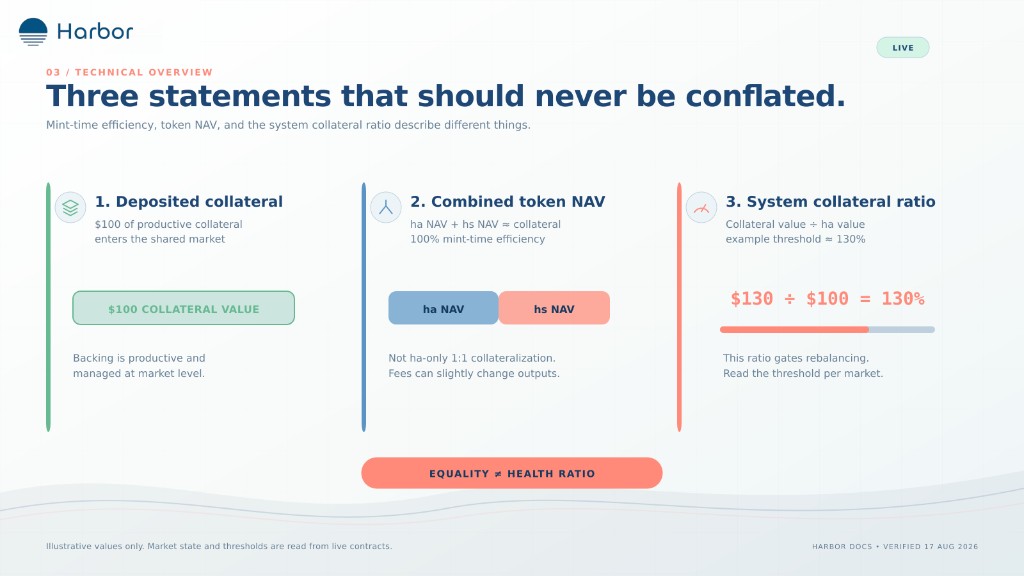
Harbor is a decentralized platform for synthetic assets: tokens that track price feeds without custody of the underlying. Each market is a shared collateralized debt position (CDP) with 100% collateral efficiency; the combined NAV of ha + hs equals deposited collateral value (subject to fees).
That is not the same as minting ha 1:1 against collateral alone; hs is the residual equity claim. It is also not the system collateral ratio (collateral value ÷ ha value, e.g. ~130%), which gates rebalancing.
- Collateral: yield-bearing assets (fxSAVE, wstETH) in the market pool
- ha (Harbor Anchored): pegged synthetic debt
- hs (Harbor Sail): leveraged residual claim
- Health: stability pools rebalance without off-chain liquidators
Users can:
- Mint ha (and optionally hs) against shared collateral
- Hold hs for protected leverage exposure (Leverage)
- Deposit ha into stability pools for yield (Earn)
Protocol architecture
1. Collateral
- Approved yield-bearing collateral per market (fxSAVE, wstETH, …)
- Collectively managed, not isolated per-user CDPs
- Global minimum collateralization ratio (collateral ÷ ha, e.g. 130%) for solvency, distinct from mint-time 100% collateral efficiency (ha + hs NAV ≈ collateral)
- Collateral yield + mint/redeem fees → protocol revenue
Revenue waterfall (per market):
- Up to ~5% → Maiden Voyage Yield Share (when eligible)
- Remainder → any post–$10M TVL treasury take, then 75% stability pools / 25% buy TIDE
See TIDE Tokenomics.
2. ha (pegged)
- 1:1 with oracle reference price
- Live examples: haETH, haBTC, haEUR (Live Markets)
- Redeemable; composable ERC-20s
- Peg maintained via arbitrage + protocol rebalancing
3. hs (leverage)
- Residual NAV after ha claims
- Named by collateral and peg (hsFXUSD-ETH, hsSTETH-BTC, …)
- No funding fees or margin calls; value moves with collateral ratio
- Absorbs losses before ha in stress; rebalanced via stability pools
Rebalancing
When collateral ratio falls below threshold (e.g. 130%):
- Protocol enters rebalance-eligible state
- MEV searchers execute rebalance txs (incentivized)
- ha from stability pools is burned
- Pool depositors receive collateral (collateral pool) or hs (Sail pool)
- System collateral ratio improves
Both pool types earn yield on ha deposits; rebalance payout differs. See Stability Pools.
Protocol workflow
- Mint: user deposits collateral via minter or zaps; mints ha and/or hs with 100% collateral efficiency (subject to dynamic fees)
- Earn: deposit ha into collateral or Sail stability pool; claim rewards
- Leverage: mint or hold hs for directional exposure
- Rebalance: automated when thresholds hit
Security & audits
Harbor has a Sherlock Collaborative Audit Report covering bao-base and bao-minter (now Harbor core). Coverage of currently deployed mainnet contracts is partial; post-audit upgrades shipped afterward; zap contracts and some packages were out of scope. See Risk Considerations.
Related
- How It Works: user-first narrative
- Architecture Overview: system map
- Build on Harbor: contracts and ABIs